What Would You Need If Disaster Struck Tomorrow?
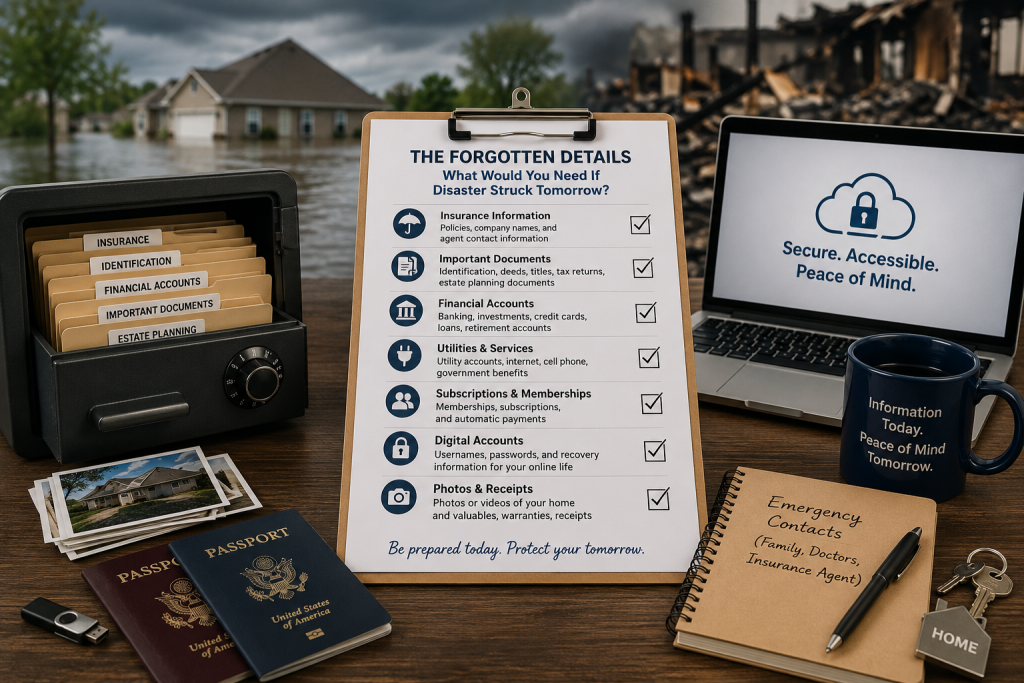 When most people think about emergency preparedness, they think about bottled water, flashlights, generators, and evacuation plans.
But what if the disaster isn’t over when the storm passes?
What if a fire, flood, hurricane, tornado, or other emergency destroys not only your home, but also the records and information you rely on every day?
The reality is that no one is safe from a natural disaster. And recovering from a flood or fire often requires far more than replacing your possessions. It requires access to the details of your life.
Insurance Information You’ll Wish You Had
One of the first calls many families make after a disaster is to their insurance company.
But would you have quick access to:
- Homeowners or renters insurance information
- Flood insurance policies
- Automobile insurance policies
- Life insurance records
- Don’t forget about the details – which company holds these insurances and your agents’ contact information.
- Health insurance information
- A list of current medications and healthcare providers
Having this information readily available can significantly reduce stress during an already overwhelming time.
The Documents People Forget About
Losing your home is devastating. Losing your ability to prove who you are, what you own, and what you’re entitled to can make recovery even more difficult.
Identification documents like;
Birth certificate, Social Security card, Driver’s license or passport, Marriage certificate are often required to replace other important records, apply for government assistance, file insurance claims, open new accounts, or verify your identity after a disaster. Property deeds, vehicle titles, mortgage documents, tax returns, and estate planning documents can also play a critical role in proving ownership, resolving legal matters, and restoring financial stability.
When these documents are destroyed or inaccessible, replacing them can involve multiple agencies, lengthy wait times, and significant frustration – precisely when you’re already dealing with the emotional and financial impact of a disaster.
Having secure digital copies and knowing where your original documents are located can dramatically simplify the recovery process.
Additional items to help rebuild:
- Photos or videos of your home and valuables for insurance claims
- Warranty information and receipts for major purchases
Life Doesn’t Stop During a Disaster
Even when you’re displaced, your everyday responsibilities continue.
Utilities still need attention. Bills still need to be paid. Subscriptions may need to be paused. Family members may need access to information on your behalf.
Would you know how to access:
- Utility accounts
- Internet and cellular providers
- Government benefits
- Memberships and subscriptions
- Online Bills and auto payment information
These accounts may seem insignificant today, but they can become major headaches when access is lost.
Don’t Forget Your Digital Life
Today, much of our lives exists online.
- Your email account may be the gateway to resetting passwords for every other account you own.
- Your cloud storage may contain irreplaceable family photos, tax records, or legal documents.
- Online banking allows you to access funds when your local branch is unavailable.
- Utility accounts let you report outages or reconnect services.
- Insurance portals allow you to file claims, upload photos, and communicate with adjusters.
Without access to your usernames, passwords, and account information, even simple tasks can become overwhelming. Recovering digital accounts often requires identity verification, security questions, or access to another account that may also be unavailable.
Your digital footprint extends well beyond social media. It includes financial institutions, insurance companies, government benefits, subscriptions, utility providers, shopping accounts, cloud storage, communication platforms, travel accounts, and payment services – all of which help keep your life running during and after an emergency.
Peace of Mind Isn’t Just About Death Planning
At My Life & Wishes, we often talk about preparing for life’s most difficult transitions. But preparedness isn’t only about what happens after we’re gone. It’s also about protecting ourselves and our families when life takes an unexpected turn.
Emergency preparedness isn’t just about having supplies for the first 72 hours. It’s about ensuring you have the information you’ll need in the weeks and months that follow.
When your important documents, financial records, insurance information, and digital accounts are organized and securely stored, you’re able to focus less on searching for information and more on what truly matters – protecting your family, rebuilding your home, and moving forward with confidence.